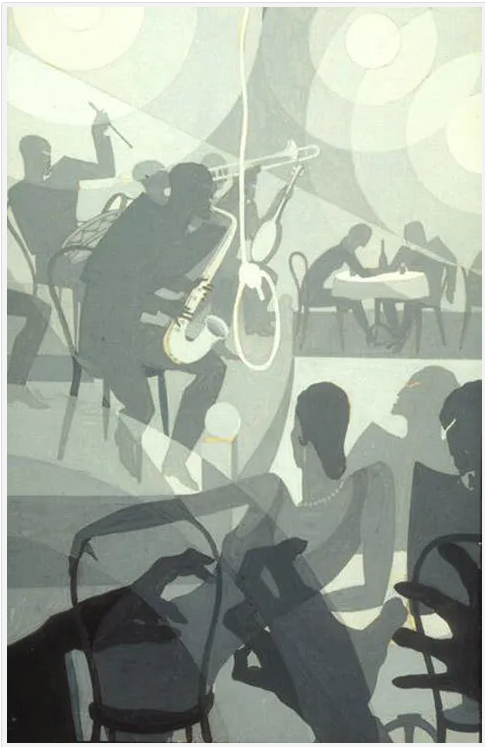
Swing jazz, Lindy Hop, and many of the other vintage dance styles we love were developed in night clubs in Harlem, New York in the 1920’s and 30s. These new styles of music and dance were part of a larger cultural phenomenon referred to as the Harlem Renaissance.
At the turn of the century African-Americans began leaving the Southern states of the US in huge numbers. Though slavery had officially ended in the 1860s, African-Americans were still treated extremely poorly in the South. Voter suppression, targeted violence, and racist laws (often referred to as ‘Jim Crow’ laws) effectively barred Black residents from participating in most forms of civic life, forcing them to live in the least desirable areas with little access to education, employment or services. Those who were able to leave to seek a better life moved to the larger cities in the North—places like Chicago, Detroit, Los Angeles and New York. This mass movement of people from South to North became known as ‘the Great Migration’.
Harlem was built to be an affluent suburban neighbourhood with stately houses, grand ballrooms, and an opera house. During the late 1800’s an influx of European immigrants began moving into the area so the affluent white residents moved further north leaving empty houses that landlords were eager to fill. Many of the Black folks who moved to New York during the Great Migration ended up in Harlem. They were joined by Afro-Caribbean immigrants and by 1930 70% of Harlem residents were Black. This vibrant new community gave rise to huge outpouring of arts and culture rooted in the Black experience.
Though many of those who moved to Harlem with the Great Migration had faced harsh treatment in the South, they had also benefitted from more opportunities and access to education than their parents or grandparents would have had. The Harlem Renaissance was an explosion of literature, music, art, and dance sparked by this coming together of a group of people with a shared history of oppression who had finally found a relatively safe place to express themselves. Though there was already an appreciation in the US of certain forms of Black music and performance often these had an element of caricature to them, such as Black performers who toured with minstrel shows. During the Harlem Renaissance Black writers and artists were finally able to create work for Black and mixed audiences and to create art more on their own terms and have it taken seriously.
To find out more about the Harlem Renaissance we recommend:
The Harlem Renaissance: What Was It, and Why Does It Matter?
National Gallery of Art Harlem Renaissance collection
 Swing Dance Leeds