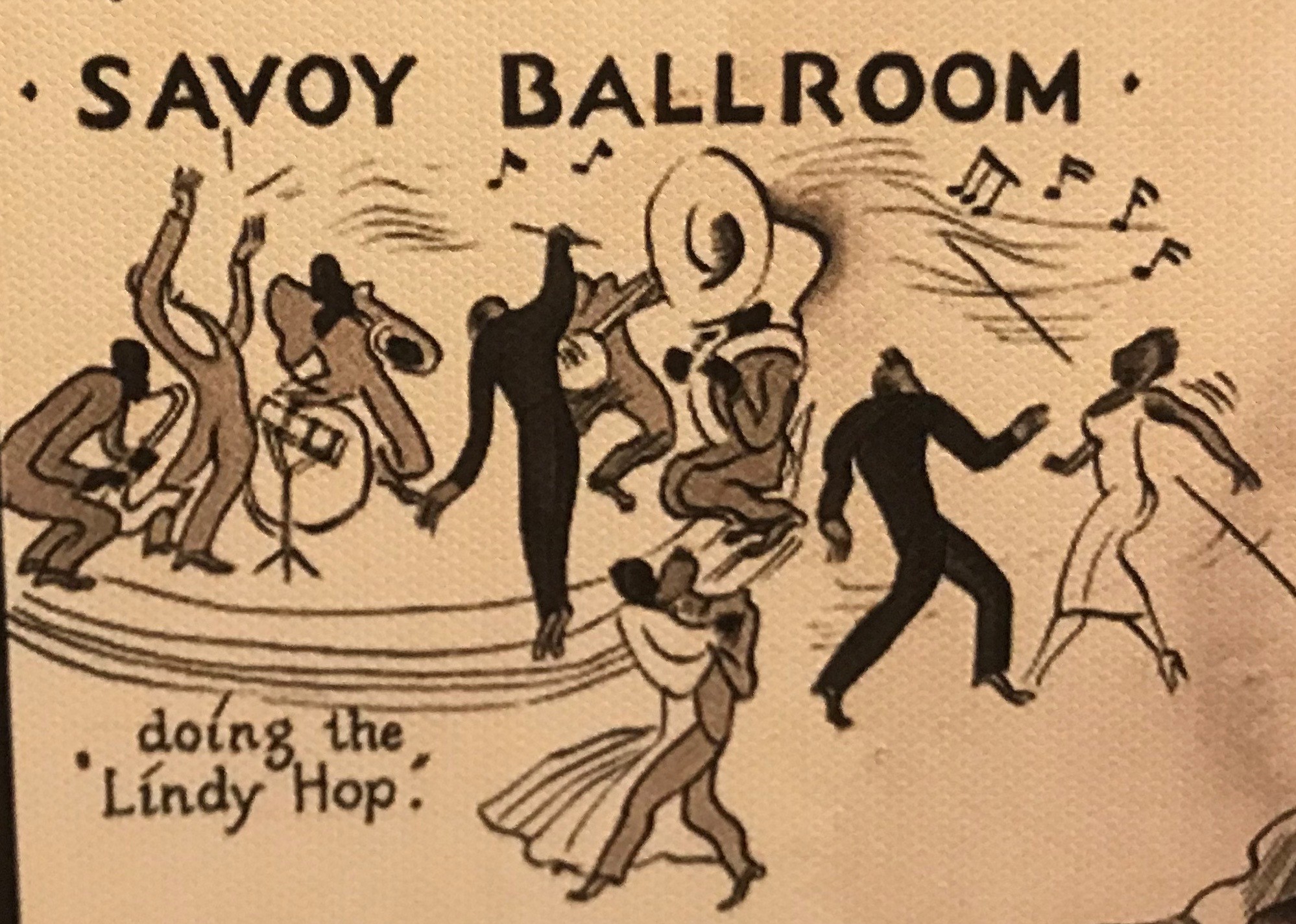
The Savoy gets mentioned a lot in the lindy hop community, almost as if it’s a place that we’re all familiar with. Here are some facts to embellish the picture you may have in your head when someone mentions the Savoy Ballroom.
The Savoy Ballroom opened in 1926 on Lenox Avenue, the main thoroughfare in the Harlem neighbourhood in New York. Harlem in the 20s and 30s was experiencing a Renaissance of Black arts and culture and audiences flocked to the entertainment venues featuring cabaret performances and up and coming jazz artists. Some venues like the Cotton Club still only admitted white audiences but the Savoy had a no-discrimination policy from the start and the clientele was 85% Black. The Ballroom was 10,000 sq ft, about half the size of the Empress Ballroom in Blackpool which is still huge! The walls were covered with mirrors and there was a bandstand at either end of the hall so the music never stopped—as soon as one band went off for their break the band at the other end would be ready to play. This setup also worked well for the battles of the bands that made the Savoy famous—including Chick Webb vs Benny Goodman and Chick Webb vs Count Basie. Other famous names that played at the Savoy include Erskin Hawkins, Duke Ellington, Ella Fitzgerald and Billie Holiday.
The reason the Savoy Ballroom is so important to lindy hoppers is that it’s the place where a lot of the lindy hop history that we’ve heard about took place. That’s where Frankie Manning did his famous first air step in a Saturday night dance contest, and it’s where Whitey’s Lindy Hoppers were assembled. Herbert “Whitey” White was a bouncer at the Savoy who saw the value in encouraging enthusiastic dancers. Rather than kick them out for dancing too wildly he found ways to feature great dancing as part of the atmosphere of the venue. He’d spot the really keen dancers and invite them to dance right in front of the band. Eventually he put together a troupe of these awesome dancers from the Savoy who toured the US and Europe and appeared in several films.
Further Reading:
 Swing Dance Leeds