
If you’ve been to even one lindy hop event it’s likely that you’ve danced to Ella Fitzgerald’s music. Her first manager was one of the founders of the Savoy ballroom and she performed there regularly in the 30s and early 40’s. At one point or another she worked with Chick Webb, Benny Goodman, Count Basie, Louis Armstrong, and Duke Ellington (just to name a few). Later in her career she recorded a whole series of albums covering songs from the Great American songbook. She’s one of the greatest swing musicians of all time and has recorded so many jazz standards that you would be hard pressed to find a swing song that she hasn’t recorded.
Fitzgerald grew up in Yonkers, a New York inner-city suburb, but moved to Harlem as a teenager in 1933 after losing her mother in a car accident. Life after her mother’s death was hard. During this time she got by partly by busking on the street. In 1934 she took first prize in a talent competition at the Apollo – she had famously planned to dance in the competition but changed her mind at the last minute and decided to sing instead. This and another competition win led to her acquaintance with Harlem jazz musicians including Tiny Bradshaw and Chick Webb. Webb become her legal guardian so that he could hire her to sing with his band even though she was not yet 18. Soon after, she began performing regularly at the Savoy Ballroom with Chick Webb’s orchestra.
The song that initially made Ella Fitzgerald famous was A Tisket a Tasket, a song that she co-wrote based on a nursery rhyme, and recorded in 1938. A year later Chick Webb passed away and Fitzgerald took over as bandleader. She was hugely popular during the big band swing era and then managed to seamlessly transition into a bebop sensation as this new style of music grew more popular. Then starting in the mid-1950’s she put out a series of albums of jazz standards that were wildly popular. During this time she also kept up a rigorous touring schedule.
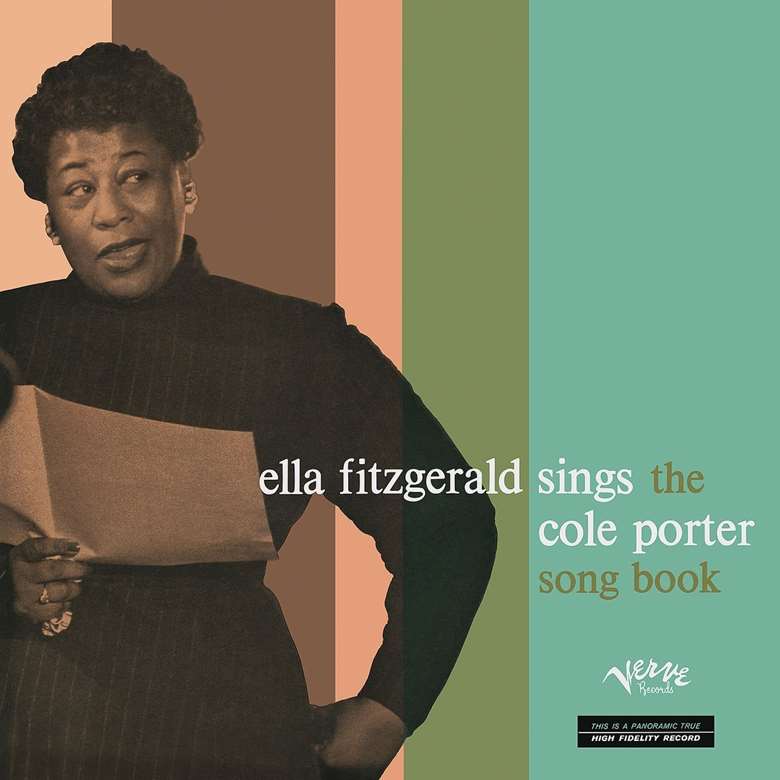
Despite being a popular and dynamic performer, Ella Fitzgerald was notoriously shy and focussed on her work. She was also well known for using her fame and popularity with Black and white audiences to support the civil rights movement. In the late 1940’s she was recruited for the Jazz at the Philharmonic tour which aimed to make a statement by insisting that venues hosting the performance must have integrated audiences. Her manager always insisted on equal pay and accommodation for the members of the band regardless of race or gender. In 1993, Fitzgerald established the Ella Fitzgerald Charitable Foundation focusing on charitable grants for four major categories: academic opportunities for children, music education, basic care needs for the less fortunate, medical research revolving around diabetes, heart disease, and vision impairment. She was awarded the NAACP Equal Justice Award and the American Black Achievement Award as well as America’s highest non-military honor, the Presidential Medal of Freedom.
Her last album was released in 1991 and her last performance was 1993. She passed away in 1996.
Recommended Resources
Video: Ella Fitzgerald | First Lady of Song (Biography)
Book: Becoming Ella Fitzgerald (published Dec 2023)
Website: Ella Fitzgerald Charitable Foundation
 Swing Dance Leeds