You’ve probably heard that Charleston was a huge dance craze that took the 1920s by storm! The start of this craze can be traced back to the 1923 Broadway musical Runnin’ Wild, one of the most successful Black musicals of the era.
“One number in the show, a dance, ultimately expressed and symbolized the whole gaudy era about to explode. It pronounced the beat for the “lost generation” and liberated the whole jazz movement. The dance song was, of course, “The Charleston” by James P. Johnson. The dance typified the black-inspired high-stepping of the era. It was gawky, zesty, and, obviously, irresistible. The show featured a group of chorus dancers called the “Dancing Redcaps” who performed the “Charleston” number accompanied by the cast patting Juba, clapping and stamping out the accents.
(from the Library of Congress Performing Arts Database)
Though Runnin’ Wild brought the Charleston into the spotlight the dance was definitely not created for this production. Two dances are often mentioned as precursors to Charleston—Juba and Gullah/Geechie dance. Juba refers to a style of dance brought to the Southern US by enslaved West Africans that featured body percussion possibly as a replacement for drums which were outlawed in some areas. Gullah and Geechie are terms that were used to refer to enslaved Africans living in the lowlands and sea islands of Georgia and South Carolina. The dances done by this group of people (which would have included Juba) were sometimes called Geechie dance or Gullah dance. While there doesn’t seem to be much historical footage of out there of Juba dancing by that name, there are videos of Gullah/Geechie dance and, oh yeah, it looks just like Charleston.

In this article on the Whitman sisters there is a mention from 1911 of them including Charleston dancing in their shows. In addition to the Whitman Sisters, the Jenkins Band also seem to have played a roll in helping to spread the Charleston in the 1910s. The Jenkins Band was a ragtime band of child musicians who performed around Charleston to raise money for their orphanage home. Their performances often included both music and dancing. The band developed such a reputation that they eventually toured jazz clubs in New York where, supposedly, patrons would shout “Hey, Charleston, do your Geechie dance!”

As Juba and Geechie/Gullah dance started showing up in performances for a wider audience and to travel out of the South, the rhythms and dance style became associated with the place where the performers came from–the area around Charleston, South Carolina.
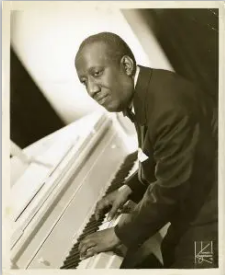
Composer James P. Johnson wasn’t from the South and wasn’t Gullah himself. He claimed that he came up with several variations of his iconic Charleston tune while working at the Jungle Casino in New York. Like any good musician he learned to play the style of music that pleased his audience and most of the dancers who frequented the club were from South Carolina.
Further reading
History of the Jenkins Institute
American Vernacular Dance: The Whitman Sisters
James P. Johnson: from Carolina Shout to The Charleston
 Swing Dance Leeds